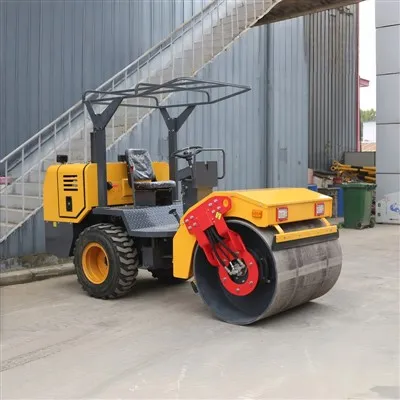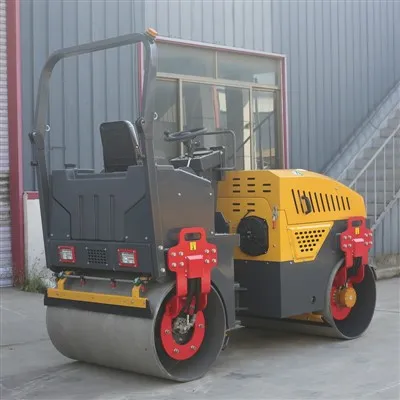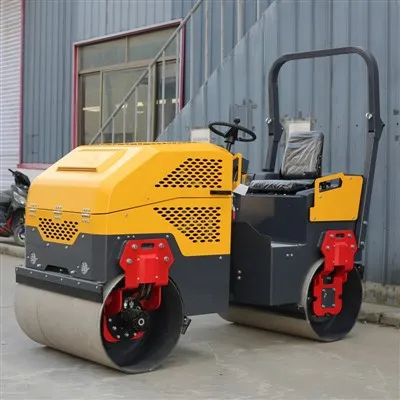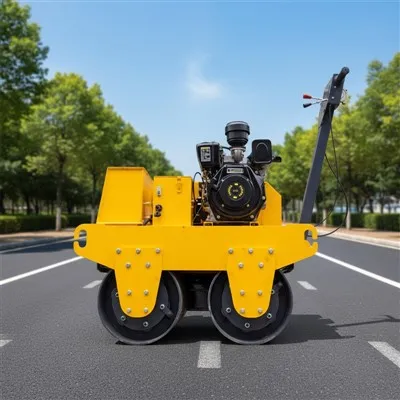

As a supplier of Mini Ride-on Rollers, I've witnessed firsthand the importance of how these machines handle bumps on various terrains. In this blog, I'll delve into the science behind how a Mini Ride-on Roller copes with bumps, exploring the key factors and technologies that contribute to its performance.
The Basics of Bump Handling
When a Mini Ride-on Roller encounters a bump, several physical principles come into play. The first is the concept of shock absorption. Just like in a car, the roller needs to absorb the impact of the bump to prevent excessive jolting and ensure a smooth ride for the operator. This is crucial not only for the comfort of the operator but also for the overall performance and longevity of the machine.
One of the primary components responsible for shock absorption in a Mini Ride-on Roller is the suspension system. The suspension system consists of springs, shock absorbers, and other components that work together to dampen the impact of the bump. When the roller hits a bump, the springs compress, absorbing the energy of the impact. The shock absorbers then dissipate this energy, preventing the springs from rebounding too quickly and causing a rough ride.
The Role of the Drum
The drum of a Mini Ride-on Roller also plays a significant role in bump handling. The drum is the part of the roller that comes into contact with the ground, and its design and construction can have a major impact on how the roller performs on uneven surfaces.
One important factor is the drum's weight distribution. A well-designed drum will have a balanced weight distribution, which helps to ensure that the roller maintains good contact with the ground even when encountering bumps. This is particularly important for achieving consistent compaction results.
Another factor is the drum's surface texture. Some Mini Ride-on Rollers feature drums with a smooth surface, while others have drums with a textured or patterned surface. The surface texture can affect how the drum grips the ground and how it responds to bumps. For example, a textured drum may provide better traction on loose or uneven surfaces, while a smooth drum may be more suitable for compacting smooth or asphalt surfaces.
The Importance of Hydraulics
Hydraulic systems are another key component in a Mini Ride-on Roller's ability to handle bumps. Hydraulic systems are used to control the movement of the drum, the steering, and other functions of the roller. They also play a role in shock absorption and stability.
One of the advantages of hydraulic systems is their ability to provide precise control. This allows the operator to adjust the speed, pressure, and other parameters of the roller to suit the specific conditions of the job. For example, when encountering a bump, the operator can use the hydraulic system to adjust the drum's movement and ensure that it maintains good contact with the ground.


Hydraulic systems also help to improve the roller's stability. By providing a smooth and consistent flow of power, hydraulic systems can help to prevent the roller from tipping or losing control when encountering bumps or uneven surfaces. This is particularly important for safety and for maintaining the integrity of the compacted surface.
Advanced Technologies for Bump Handling
In addition to the basic components and principles discussed above, many modern Mini Ride-on Rollers feature advanced technologies that further enhance their ability to handle bumps. These technologies include:
- Vibratory Systems: Vibratory systems are commonly used in Mini Ride-on Rollers to improve compaction efficiency. They work by generating vibrations that are transmitted to the drum, helping to break up and compact the material being rolled. Vibratory systems can also help to reduce the impact of bumps by providing a more consistent and uniform compaction force.
- Automatic Leveling Systems: Automatic leveling systems are designed to ensure that the roller remains level and stable at all times. They use sensors and hydraulic controls to adjust the position of the drum and the frame of the roller, compensating for changes in terrain and preventing the roller from tilting or tipping.
- Variable Frequency and Amplitude Control: Some Mini Ride-on Rollers feature variable frequency and amplitude control, which allows the operator to adjust the characteristics of the vibrations generated by the drum. This can be useful for adapting to different types of materials and compaction requirements, as well as for improving the roller's performance on uneven surfaces.
Conclusion
In conclusion, a Mini Ride-on Roller's ability to handle bumps is a complex interplay of mechanical design, hydraulic systems, and advanced technologies. By understanding the principles behind how these machines absorb shocks, maintain stability, and adapt to uneven surfaces, operators can ensure that they are using their rollers to their full potential.
As a supplier of Mini Ride-on Rollers, I'm proud to offer a range of high-quality machines that are designed to provide excellent bump handling performance. Our Mini Ride-on Roller models are equipped with advanced suspension systems, hydraulic controls, and other features that help to ensure a smooth and efficient operation on any terrain.
If you're in the market for a Mini Ride-on Roller, or if you have any questions about our products or services, I encourage you to [contact us](insert appropriate contact method). Our team of experts is always available to provide you with more information and to help you find the right roller for your needs. Whether you're working on a small residential project or a large commercial construction site, we're confident that our Mini Ride-on Rollers will meet your expectations.
In addition to our Mini Ride-on Rollers, we also offer a wide range of other road construction equipment, including Full Hydraulic Road Roller, Ride-on Soil Compactor, Vibratory Roller, and Diesel Road Roller. Our products are known for their reliability, durability, and performance, and we're committed to providing our customers with the best possible value for their money.
So, if you're looking for a high-quality Mini Ride-on Roller or other road construction equipment, look no further. Contact us today to learn more about our products and to start the purchasing process. We look forward to working with you!
References
- "Principles of Road Construction Machinery," John Wiley & Sons, 2018
- "Hydraulic Systems in Construction Equipment," McGraw-Hill, 2019
- "Advanced Technologies for Soil Compaction," ASCE Press, 2020