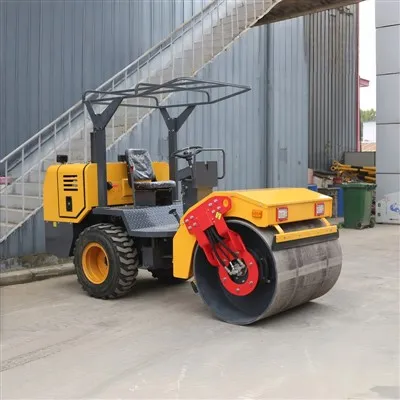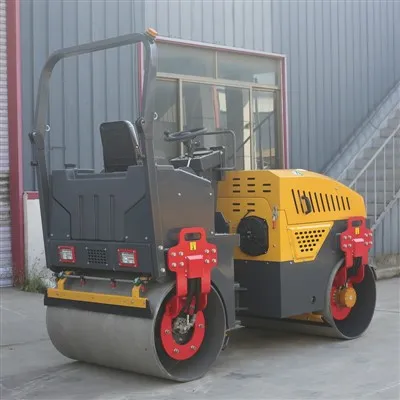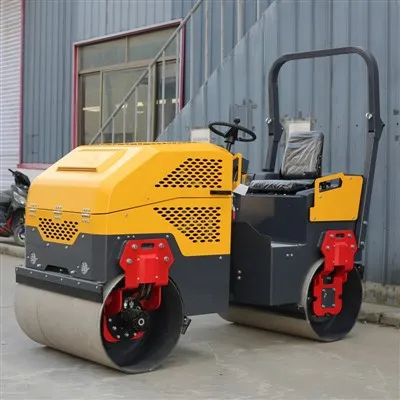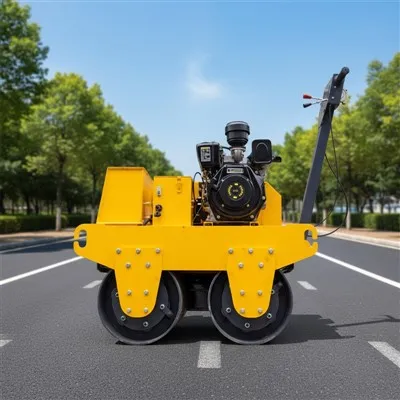

Hey there! As a supplier of Ride-on Soil Compactors, I've seen firsthand how crucial the vibration frequency of these machines is for effective compaction. In this blog, I'm gonna break down how the vibration frequency of a ride-on soil compactor affects the compaction process.
Understanding Vibration Frequency in Ride-on Soil Compactors
Let's start with the basics. Vibration frequency in a ride-on soil compactor refers to the number of vibrations per unit of time, usually measured in hertz (Hz). It's a key factor that determines how well the compactor can densify the soil. When the compactor vibrates, it generates dynamic forces that help to rearrange the soil particles, reducing the voids between them and increasing the soil's density.
The vibration frequency can vary depending on the type of soil and the compaction requirements. For example, cohesive soils like clay require lower vibration frequencies, typically in the range of 25 - 35 Hz. This is because cohesive soils have strong internal bonds, and a lower frequency allows the compactor to penetrate the soil and break these bonds more effectively. On the other hand, granular soils like sand can handle higher vibration frequencies, usually between 35 - 50 Hz. The higher frequency helps to move the loose sand particles into a more compact arrangement.
Effects of Vibration Frequency on Compaction
Compaction Depth
One of the most significant effects of vibration frequency is on the compaction depth. A higher vibration frequency generally results in a shallower compaction depth, while a lower frequency can achieve a greater depth. This is because the higher frequency vibrations are more concentrated on the surface of the soil, causing the particles near the surface to compact quickly. In contrast, the lower frequency vibrations can penetrate deeper into the soil, reaching the particles at lower depths and compacting them.
For instance, if you're working on a project that requires deep compaction, like building a foundation for a large structure, a ride-on soil compactor with a lower vibration frequency would be more suitable. However, if you're just compacting the surface layer for a small driveway or a sidewalk, a higher frequency compactor might do the job.
Compaction Efficiency
Vibration frequency also affects the compaction efficiency. A compactor with the right vibration frequency can achieve the desired compaction level in fewer passes, saving time and energy. When the frequency is matched to the soil type, the compactor can more effectively transfer the vibratory energy to the soil particles, resulting in better compaction.
If the frequency is too low, the compactor may not be able to generate enough force to move the soil particles, and multiple passes may be required to achieve the desired compaction. Conversely, if the frequency is too high, the compactor may cause the soil to become over-compacted near the surface, while the deeper layers remain under-compacted.
Soil Density
The vibration frequency has a direct impact on the final soil density. By adjusting the frequency, you can control how tightly the soil particles are packed together. A well-chosen frequency can help to achieve the maximum possible density for a given soil type.
For example, in a project where high soil density is crucial, such as a landfill or a road base, selecting the appropriate vibration frequency can ensure that the soil meets the required density standards. This not only improves the stability and durability of the structure but also reduces the risk of future settlement.

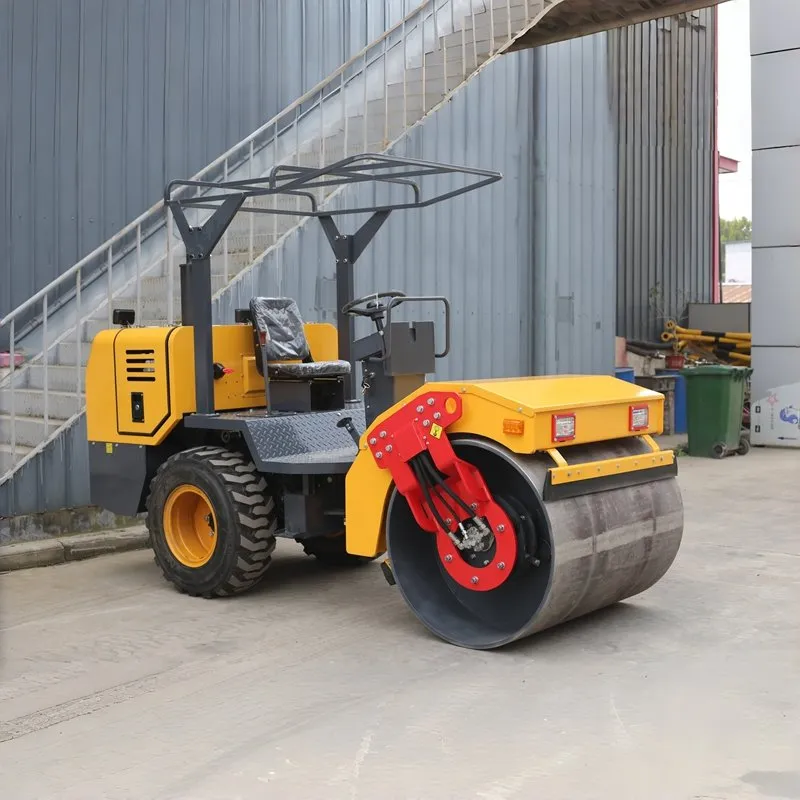
Choosing the Right Vibration Frequency
So, how do you choose the right vibration frequency for your ride-on soil compactor? Well, it all comes down to understanding the soil type and the compaction requirements of your project.
First, you need to conduct a soil test to determine the soil type. This can be done using simple field tests or more advanced laboratory analysis. Once you know the soil type, you can refer to the manufacturer's guidelines for the recommended vibration frequency range.
In addition to the soil type, you also need to consider the compaction depth and the desired density. If you need to achieve a deep compaction, a lower frequency may be necessary. If you're aiming for a high surface density, a higher frequency might be more appropriate.
It's also important to note that some ride-on soil compactors come with adjustable vibration frequencies. This allows you to fine-tune the frequency based on the specific conditions of your project. This flexibility can be a real advantage, especially when working on projects with varying soil types or compaction requirements.
Our Ride-on Soil Compactors and Vibration Frequency
At our company, we offer a wide range of Ride-on Soil Compactors with different vibration frequencies to meet the diverse needs of our customers. Our machines are designed to provide optimal compaction performance, whether you're working on a small residential project or a large commercial development.
We have Full Hydraulic Road Rollers that offer precise control over the vibration frequency, allowing you to adjust it according to the soil conditions. These rollers are equipped with advanced hydraulic systems that ensure smooth and efficient operation.
Our Diesel Road Rollers are known for their high power and reliability. They can handle a variety of soil types and are suitable for large-scale compaction projects. The vibration frequency of these rollers can be adjusted to achieve the best compaction results.
If you're working on a smaller project, our Mini Ride-on Rollers are a great option. These compact and maneuverable rollers offer a range of vibration frequencies to suit different soil types and compaction requirements.
We also have Vibratory Rollers that are designed to provide high-frequency vibrations for efficient surface compaction. These rollers are ideal for projects where a smooth and dense surface is required.
Conclusion
In conclusion, the vibration frequency of a ride-on soil compactor plays a crucial role in the compaction process. By understanding how it affects compaction depth, efficiency, and soil density, you can choose the right frequency for your project and achieve the best possible results.
If you're in the market for a ride-on soil compactor, we'd love to help you find the perfect machine for your needs. Our team of experts can provide you with detailed information about our products and help you make an informed decision. Don't hesitate to get in touch with us to discuss your requirements and start a purchase negotiation.
References
- ASTM D6938 - 17, Standard Test Method for In - Place Density and Water Content of Soil and Soil - Aggregate by Nuclear Methods (Shallow Depth).
- ASCE Manuals and Reports on Engineering Practice No. 103, Compaction of Soils.